By Bali Hand Made Jewelry Editorial Desk
As a professional trade buyer seeking authentic, high-quality jewelry, understanding hallmarking is crucial for market entry and compliance. At Bali Hand Made Jewelry, we pride ourselves on our handmade jewelry crafted in Bali’s renowned Celuk village, offering you the assurance of quality and compliance through hallmarking and assay processes.
What Jewelry Hallmarking Proves
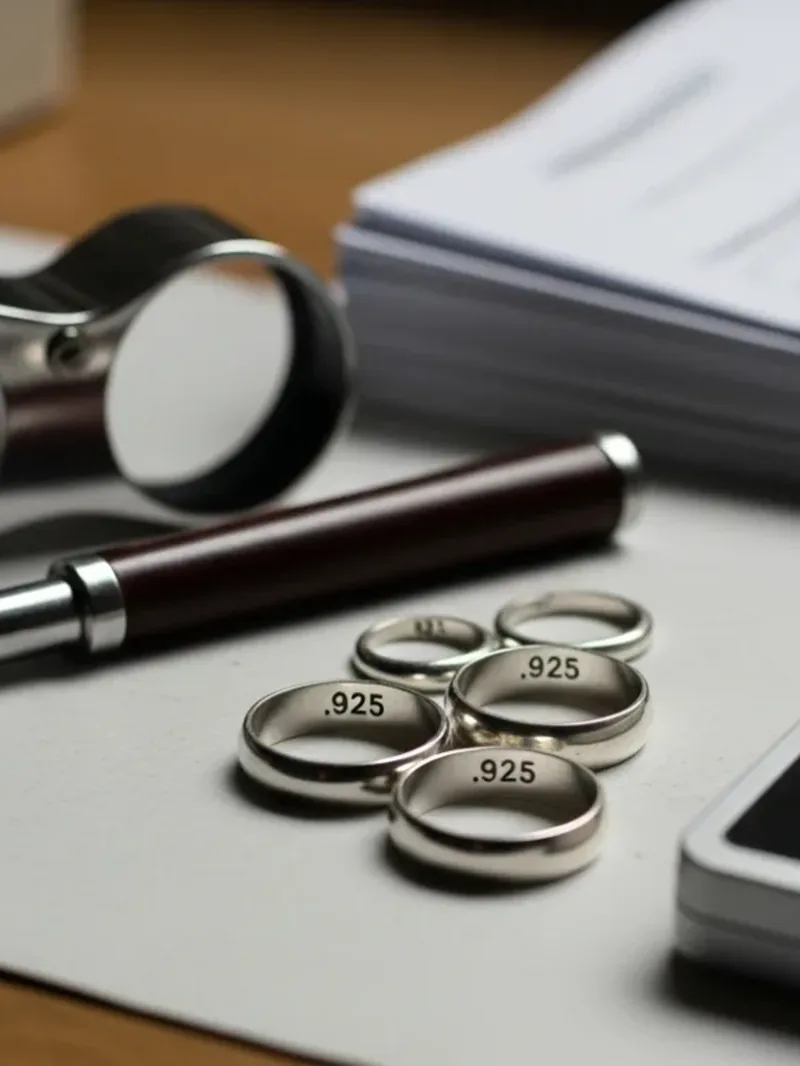
Jewelry hallmarking is a process that certifies the purity and authenticity of precious metals used in jewelry making. This certification is crucial for verifying the metal content, ensuring that pieces labeled as sterling silver or gold meet the defined standards. For instance, sterling silver must contain 92.5% pure silver to qualify for a 925 stamp. This hallmarking process involves an independent assay office that tests and marks each piece with a hallmark indicating its metal content and origin. This not only reassures buyers of the product’s quality but also enhances the credibility of the brand in the international market. Hallmarking is particularly important for buyers in regions where legal standards require such certification, ensuring your products meet all necessary regulations and expectations.
Markets Requiring Hallmarking
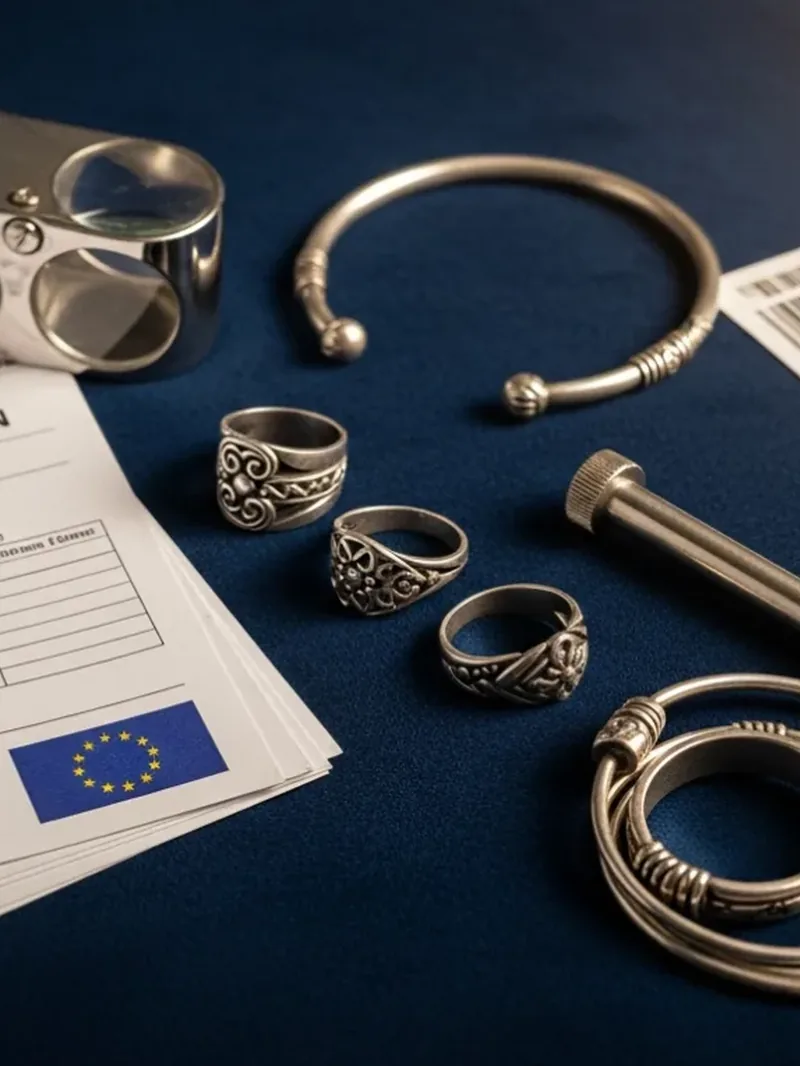
Some markets have stringent requirements for jewelry hallmarking. The United Kingdom, for instance, mandates that all precious metal items above a certain weight are hallmarked by an approved assay office. This ensures compliance with the UK’s legal standards for metal purity. Similarly, other markets like the European Union and parts of Asia also have hallmarking requirements, although these can vary. In the EU, hallmarking is often linked to compliance with the REACH Nickel Directive, ensuring that jewelry is nickel-free and safe for consumers. By understanding and adhering to these requirements, you can ensure that your products are viable for sale in these markets, maintaining legal compliance and consumer trust.
Arranging Assay and Hallmarking
Arranging an assay and hallmarking for your jewelry can be seamlessly integrated into your production process. Begin by selecting an independent assay office, preferably one recognized in your target market, such as those in the UK or EU. The process typically involves submitting samples of your jewelry for testing, where the metal content is verified against industry standards. Once tested, each piece is stamped with a hallmark that includes a purity mark, an assay office mark, and potentially a maker’s mark. At Bali Hand Made Jewelry, we can facilitate this process for you, ensuring that your jewelry meets all necessary legal requirements. This service provides added assurance to your customers, enhancing the marketability of your products.
Materials and Craftsmanship in Bali
Our jewelry is handcrafted in Bali, primarily in the Celuk village, a hub for skilled silver- and gold-smiths. Our artisans use techniques like lost-wax casting, hand-fabrication, filigree, and granulation, known locally as jawan. We work with a variety of materials including 925 sterling silver, fine silver 999, gold vermeil, and solid gold in 14k and 18k. Each piece can be set with natural gemstones such as turquoise, lapis lazuli, and moonstone, or adorned with pearls from Indonesia’s rich pearl-producing regions. This commitment to quality materials and traditional craftsmanship ensures that each piece is not only beautiful but also durable and compliant with international standards.
Order Quantities and Customization Options
Our minimum order quantities (MOQ) are designed to be flexible, accommodating both small and large orders. Typically, the MOQ is a modest number of pieces per design, allowing for mixed-design orders, particularly for first-time buyers. We also offer custom and OEM production based on buyer’s drawings, CAD files, or reference samples, along with private-label stamping and custom packaging. This flexibility ensures that you can tailor our products to fit your brand’s unique needs, whether you’re a boutique retailer or a large-scale importer. Sampling is available prior to bulk orders, with lead times approximately 1-3 weeks for samples and 3-6 weeks for bulk production, depending on complexity.
Export and Shipping Logistics
Given the high value and small size of jewelry, we ship primarily by air for efficiency and security. We use international couriers like DHL and FedEx, ensuring fast transit times, typically just a few days depending on the destination. Shipping options include FOB from Bali or CIF/courier-delivered on request. All shipments are insured, providing assurance and security for your investment. Our regular markets include the US, EU, UK, Australia, Japan, and the Middle East, with each shipment tailored to meet specific market requirements and preferences.
Ensuring Compliance and Quality Assurance
Quality and compliance are non-negotiable at Bali Hand Made Jewelry. We ensure that all our jewelry is nickel-free and lead/cadmium-compliant, meeting EU REACH and US standards. This is confirmed through rigorous testing and quality control processes. Buyers are encouraged to specify their compliance needs, and we will tailor our production accordingly. This commitment to quality and compliance not only protects your brand but also assures your customers of the safety and authenticity of their jewelry purchases. For more information on our export process, visit our detailed guide.
Understanding Bali’s Cultural Influence on Jewelry Design
Bali is not just a location; it is a rich cultural tapestry that influences every piece of jewelry crafted here. The island’s deep-rooted traditions and spiritual significance are often reflected in the intricate designs of our jewelry. Balinese artisans draw inspiration from local mythology, nature, and religious symbols, infusing each creation with a story and meaning. Traditional motifs such as the lotus flower, a symbol of purity and enlightenment, and the Barong, a protector spirit, are commonly featured in our designs. This cultural infusion not only adds aesthetic value but also connects the jewelry to a broader cultural narrative, making each piece unique and meaningful.
The Environmental and Ethical Commitment of Bali Hand Made Jewelry
At Bali Hand Made Jewelry, we are committed to environmental sustainability and ethical practices. We source our materials responsibly, ensuring that our silver and gold are procured from suppliers who adhere to ethical mining practices. Additionally, we strive to minimize our carbon footprint by employing eco-friendly production processes and reducing waste. Our artisans are provided with fair wages and safe working conditions, reflecting our commitment to ethical labor practices. This dedication to sustainability and ethics is an integral part of our brand, allowing us to offer jewelry that not only meets high-quality standards but also aligns with the values of socially-conscious consumers.
Technological Integration in Jewelry Crafting
While traditional craftsmanship is at the heart of Bali Hand Made Jewelry, we also embrace modern technology to enhance our jewelry production. Our artisans are skilled in using advanced tools and techniques, such as Computer-Aided Design (CAD) and 3D printing, to create precise and intricate designs. This integration of technology allows us to innovate and offer custom designs that meet the specific needs of our clients. By combining the precision of technology with the artistry of traditional methods, we ensure that each piece of jewelry is not only aesthetically pleasing but also crafted to perfection. This approach enables us to maintain a competitive edge in the global jewelry market.
Ready to enhance your jewelry collection with authentic Balinese craftsmanship? Contact us today to discuss your needs and explore our range of customizable options. Reach out via WhatsApp at +62 811-3941-4563 or email us at [email protected]. For more details, visit our contact page.